Monday, June 25, 2018

Nothing but a Flashlight and a Map

Hey! Hello there! I'm Ben. I just got here. Well, relatively speaking. I mean, I've been here about thirty-eight years, as far as I remember. I don't remember anything before here, just that I was suddenly here and it was dark and cold and scary and I really didn't know what this "here" place was or why I was here or what I was supposed to be doing here. I still don't, to be honest, but I had a flashlight and some nice people gave me a map, so I've been exploring. The map looked really old and it looked like a lot of people had been adding to it over the years--some features had been added in different colored inks, some features had been scratched out or erased, and there were several notes written all over the map in different handwriting. I've been using the map to help me explore this place and don't get me wrong, it's better than not having a map, but this thing is not accurate. Like, one time I was following a trail to where the map said there was a big treasure chest full of gold and silver and diamonds, but all I found when I got there was a big pile of manure. I added a note to the map so I'd remember not to go that way again. The map did help me avoid that big pit over there, so like I said it's not worthless, but I get the impression that the people who made the map were just like me, wandering around in this massive, dark place with nothing but a flashlight, and maybe an old map someone gave them. I don't think they were giving me bad information on purpose--at least not most of them--but you try mapping a place this big when all you have is a flashlight.


Oh, you are trying? Hey, I have an idea: What if we work together? You keep wandering, shining your flashlight wherever you go, and making notes on your map. I'll do the same, and next time we run into each other we can compare notes. I can see you're hesitant. I get it. I'm sure there were things on the map they gave you that led you astray, and you don't want to make that mistake again--putting too much trust in another wanderer who, after all, is just another guy with a flashlight. Maybe I see something that looks like a monster, but actually it's just a shadow. Maybe I find the perfect chair to sit down and take a break, but the chair is too hard or too soft for you. Believe me, I understand. So how about this? Let's agree up front that each of us gets to decide what we add to our own map. Like maybe when you share your notes with me, I'll pencil them in on my map, but only if they make sense based on what I've seen for myself. I'll let you know if I find something that contradicts one of your notes, and I hope you'll do the same for me, but let's agree right now that this isn't about proving one of us is right and the other is wrong; it's about working together, sharing our resources to figure this place out.

Hey, isn't that much better? This information-sharing thing you and I have going is really working out, and I feel like my understanding of this place is exponentially better thanks to the combined benefit of two flashlights, two maps, and two explorers. Which has me thinking… As I've been wandering around, I saw a lot of other flashlights out there. Like, way more than just you and me. Enough that it's hard to go anywhere without bumping into someone. What say we invite others to join our little exploration party? Same agreement--each of us does our own thing, finds what we can find with our own flashlights and our own maps, and reports back. That’s got to improve each of our chances of creating a map that approximates the real thing, right? Okay, let's give this a shot.

Oh. Oh, hey. Whoa. Sorry, didn't see you there. Ow! That was my toe. Hey, ow, um, uh, ah--dang, it's crowded in here, isn't it? And so loud! Why is everyone yelling? I don't… Oh, crap, is he hitting her with his map? But that wasn't--Hey! What are you guys doing to each other? What's--

HEY! STOP IT!

Hey guys. Sorry to yell at you. I don't mean to be a jerk. That's really not how I wanted this to go. I'm sorry, guys. This wasn't the deal. Remember we were all in this together? We were just trying to figure this place out? I feel like we've gotten off track. And, I've got to be honest, I'm just as guilty as any of us are. I got caught up in what I had on my map and I so strongly disagreed with what you folks over there were putting on your maps and when I realized things weren't going as I intended and people were getting hurt I kind of panicked and then everyone was yelling and I felt like no one was listening to me so I yelled louder and--

Well, here we are. I'm sorry if I was a jerk to you. I will try to do better. Please let me know if I screw up again.

So where do we go from here? The way I see it, we have three options:

  • We keep doing what we're doing. I mean, I guess that's an option, but you know what they say about doing the same thing and expecting different results..
  • We call the whole thing off. We tried. It didn't work. Oh well. I'll go back to wandering around with my flashlight and map and you go back to wandering around with yours, and we'll just keep our findings to ourselves. Except. Except there are still a ton of us in here, and we're just going to keep bumping into each other as we wander around in the dark, trying to figure out what this place is. I'm not sure how not talking to each other will help anything.
  • OR, we keep trying, but with renewed emphasis on our shared mission to make sense of this place, and maybe a few general rules of conduct we can agree on. I propose the following:
    • Remember, it's not about being right. We're all in this together. If you show me that something on my map doesn't match up with what you've seen with your flashlight, it's in my best interest to check it out and, if I agree with your conclusion, to change my map. Me insisting my map is right just because it's my map really does me no good.
    • We all need to agree to listen at least as much as we talk. Like, 50/50 split as a bare minimum. But really, I've just got one flashlight and there are seven billion other flashlights out there, so I'd probably be better off listening way more than I talk.
    • Okay, so we're all talking and we're all listening. What else? Is it too much to ask that we be kind to each other? I mean, I get that we can't be kind all the time. Like, when my flashlight caught that man hitting that woman, my immediate priority wasn't being kind to the man. But let's at least agree to be kind whenever we can?
    • If kindness feels like too much, then let's at least agree not to hurt others on purpose, and to listen when people tell us we're hurting them unintentionally. 

What do you say? Am I being unreasonable? How about this? I'm not going to put a gun to your head and make you agree to these rules. That would kind of go against the spirit of the whole thing, don't you think? Instead, I'll just do my part: I'll keep searching through this place, sharing my observations with anyone who's interested, and I'll listen to anyone who wants to share their observations with me. I'll do my best to be kind, and not to hurt anyone. I think this is the best way to figure this place out, but the whole point is that we all have different opinions, so I'll do me and you do you. And if you want to join my little party, you are more than welcome, so long as you play nice with the rest of us. Happy exploring!

Thursday, June 21, 2018

Unruly

Last month when my fourteen-year-old daughter got dress-coded at school for having colored hair and then her petition to change the dress code went mini-viral among some of our local friends, I learned something about myself: I don't see any value in following rules just because they are rules. This has not always been true; I have spent most of my life as a rule-follower by nature. So much, in fact, that even now I only break rules when I make a conscious, deliberate decision to do so. My default is still to follow rules just because my brain is used to believing that's what you're supposed to do. But I no longer assign any moral value to following rules, per se.

I found this image randomly on the internet and had originally linked to the source, but the source told me they didn't want me to link to them. I love that they chose a robot as their mascot for rule-following. I was a good little robot for much of my life, doing exactly what I was programmed to do.

This realization dawned on me as I read comments on my friends' posts about the dress code situation, and I saw how many of my friends' friends interpreted it as a moral issue: It was unambiguously clear to them that the right thing to do, even if you disagree with a school's dress code, is to follow it because it's the rule. In their eyes, I was a horrible father for allowing my daughter to dye her hair when that was against the rules, and the "right" way to do it would have been to first try to change the rule, then dye her hair. I see two problems with that logic:
  1. I was aware of the rule, but I wasn't sure it would be enforced. It's very common for old, outdated rules to still be on the books even though no one enforces them anymore because we recognize the rules no longer serve a purpose (or never did). If the rule wasn't going to be enforced, as I believed would be the case if the principal were a reasonable person conscious of the fact that we're living in the 21st century, then I wasn't going to bother making a fuss. 
  2. As far as I was concerned, the rule was not valid. The school has no right to tell my daughter what color her hair needs to be, because they do not own her body. She does. As such, I felt no need to ask for permission before I allowed her to exercise her right to do whatever she wants with her own body. 
See, here's the thing. Rules are not inviolable laws of the universe. They're agreements to behave in certain ways because we want to achieve certain effects. As humanity learns and progresses, we realize that some rules serve the purpose we created them for, and others don't. The ones that don't, we change. There are many ways to change rules, depending on the rule, the system that enforces the rule, and your position within that system. One tried and true way of changing rules is to break them. If enough people break the rule and we collectively see that the system doesn't fall apart, then the system is forced to reconsider the rule's purpose and value. The risk of taking this approach is that you may have to suffer system-imposed consequences of breaking the rule until it's changed. I made sure my daughter understood this before dyeing her hair and, as it turned out, she was faced with consequences: The principal told her she had to choose between covering up the dyed hair with natural-color dye or not participating in the end-of-year awards ceremony and other activities. I made it clear to my daughter that this was not a moral decision with a right and wrong answer; it was a matter of what compromises she was willing to make in order to be allowed continued participation in the system. She chose to cover up the bright colors in order to attend the awards ceremony, and did so for two days until we successfully changed the dress code. As far as I'm concerned, my daughter behaved ethically and responsibly throughout the ordeal, and her approach proved effective as she achieved her goal: Future students at the school will no longer be subjected to this silly, outdated rule. 

Human laws, of course, are just rules that a large group of people have agreed on. Just like any other rule, laws are only valuable so long as we agree they are valuable. For example, we tend to think of the choice to smoke marijuana or not as a moral issue because we're so used to it being illegal, but the fact that it is no longer illegal in several states and countries around the world shows just how arbitrary the law is. Those who do not believe it immoral to smoke pot and want to do so but live in places where it's illegal, then, have not a moral choice but a choice between potential consequences: 
  1. Choose not to smoke because they don't want to suffer the consequences of breaking the law.
  2. Choose to smoke knowing that they risk suffering the consequences of breaking the law. 
Either choice is a valid choice, and of course there are a lot of factors to consider that will be different for each individual. For example, if you are a black man in America then statistically speaking the risk you take when breaking the law is greater than the risk a white person faces when breaking the same law because black men are much more likely to receive tougher sentencing. If you're a minor, the choice to smoke pot or not carries with it not only legal risks but also health risks, as studies suggest marijuana use during teenage years can negatively impact brain development

Image result for no marijuana
Don't do drugs, kids. Adults, I sincerely do not care whether you do drugs, so long as you aren't hurting anybody. 

We've seen this divide between the rules-for-rules'-sake mindset and the rules-so-long-as-they-serve-a-purpose mindset in the response to the recent immigration crisis. To those who see following rules as a moral issue, the immigrants who broke the law by entering the United States illegally were simply suffering the consequences of breaking the law, and that happened to include their children being locked up in cages. These "illegals" had behaved immorally and it was not our place to remove the consequence of that choice any more than it would be our place to stop God from punishing a sinner (although now that I think about it, I recall there being a guy in Christian theology who did exactly that--a guy Christians are supposedly trying to be like...). For those of us who believe rules and laws are arbitrary and malleable, we're more likely to question whether the law these immigrants are being punished for violating is valid in the first place, and to conclude, if nothing else, that in this case the punishment far outweighed the severity of the crime. 

So that's my take on rules, laws, dress codes, pot, and immigration. What do you think? Does this kind of thinking inevitably lead to chaos and the downfall of civilization? Alternatively, am I giving rules too much credit and really we'd be better off without them entirely? What rules or laws do you break regularly? Do you break speed limit laws when driving? I want to hear your thoughts, and I promise to be nice even if we disagree--that's a rule I try hard not to break. 

Thursday, June 7, 2018

The Great Social Catalyst


I was on my way to write a blog post about the good and bad of social media, but of course I had to check in on Facebook first, and when I did I came across the above video. If you don't feel like taking three and a half minutes to watch it, the concept is that there's this bar where people behave like we do on social media--randomly declaring political beliefs, talking at each other without listening in return, fighting over every little thing, and generally being mean. Basically, social media brings out the worst in humanity. 

I can't disagree with any of the criticisms this video makes--and it's far from the first to make them. I mean, you don't have to look any further than the current American president's Twitter account to see how social media can bring out the worst in humanity. But clearly there is still value in social media. If at least some part of you didn't think so, you wouldn't still be here. 

Here's what I believe: Future generations will look back at the advent of social media as a turning point in humanity's history that ultimately led to a far greater sense of connectedness across formerly insurmountable boundaries of distance, culture, language, religion, and politics. Social media will be the catalyst that pushes the human race beyond tribalism and toward truly thinking of ourselves as a single global community. Optimistic, you say? Yes, yes it is. (That's kind of my schtick.)

But social media certainly has the potential to be this catalyst. Among my Facebook friends I have coworkers thousands of miles from me in the Philippines, Australia, the UK, and all around the US; PTA and neighborhood friends here in Utah, most of whom are very religious and relatively conservative; mostly liberal friends from my college years spent with fellow humanities and then library science students; and friends who are gay, lesbian, straight, bi, trans, and two spirit. (This is not an exhaustive list; sorry if I left you out.) Just like every other human, I'm likely to interact more with those I have more in common with--whether geography, culture, politics, religion, or a similar sense of humor--but I still see those posts from the friends who are less like me. Sometimes those posts connect with me, regardless of our differences; sometimes I'm just not interested in a post so I keep scrolling; and of course sometimes someone says something political or religious that presses my button in just the wrong way, and sometimes I do better than others at either engaging civilly or shutting up and walking away. But whatever my reaction, I see those posts, and every time I do, my worldview expands just a little bit. I get a glimpse into the daily lives of people who are different from me, and more importantly I get a glimpse into their minds. I will never see President Trump the way his supporters do, but thanks to a few of my Facebook friends I have a pretty good idea of how they perceive him. That, as far as I'm concerned, is a major value that social media adds to my life. 

Social media is still relatively new, in terms of the history of human evolution, and we're still figuring out how to navigate this new landscape. We're not used to being so exposed to each other's raw emotions and often-unfiltered thoughts. If the human race had suddenly discovered telepathy, we'd be having the same problem. But telepathy would not only expose us to each other's darkest, meanest, ugliest inner selves; it would also expose us to each other's most loving, most vulnerable, most beautiful inner selves. We would come to see not only our neighbor's anger, but also the reasons for their anger. And we would see their love. Social media can do that too. Social media can help us understand our fellow humans who are different from us in ways that we've never had such easy access to before. 

Image result for jean grey dark phoenix
At least with social media we don't run the risk of possession by an evil alien psychic force.
Or whatever the whole Dark Phoenix thing was. Sue me, I'm a DC guy. 

We just need to learn to treat a name and a profile picture the same as we treat a human being--because, guess what, they are a human being! It wouldn't surprise me if this comes much easier to future generations who grow up in this brave new world than it does to us. But in the meantime, maybe we can all just try extra hard to be a little nicer, and to listen at least as much as we talk? With that in mind, it's now my turn to listen: What do you say, friend? What can we all do to make social media a positive force in humanity's evolution? Or do you believe social media is inherently detrimental? (And if so, why are you here?) Please comment below or on Facebook--I want to hear your thoughts via this fancy telepathic technology Mark Zuckerberg and Al Gore gave us. 

Sunday, June 3, 2018

Bigotry By Omission

The other day I was at a junior high school PTSA meeting where we were about to vote in next year's president. The sole nominee (there's typically only one person willing to do the job, so it's not a traditional election in the sense of voting for one candidate over another) was a man, which is unusual for any PTA or PTSA, at least here in Utah. Having served previously on another PTA as treasurer and then president, and planning to serve alongside this particular presidential nominee as his treasurer, I'm a big fan of men being more involved in PTA. Studies show that children benefit from having male role models involved in their school life, but for some reason a lot of fathers seem to group school involvement into the long list of parenting responsibilities they're happy to let mothers take care of.

At any rate, at this particular PTSA meeting we were enjoying a delicious lunch that the current president had prepared. This president had taken it on herself to serve lunch at every meeting, as a way to incentivize attendance and to share her love of food. So we're eating this tasty pasta salad and we're about to vote on next year's president and I raise my hand to ask, jokingly, whether the nominee can make food this good, because I want to make an informed vote. Everyone laughs and he says that actually, he does enjoy baking with his wife. Later in that same meeting, a visitor spoke to us about her current campaign to be on the school board. I revived my previous joke by asking about her cooking skills. Everyone laughed again and the candidate just rolled her eyes and went on. 

It didn't take me long to start feeling skeezy about my joke--especially the second instance, where it was delivered to a woman. In my mind, I was showing my appreciation for the current president's work to prepare food for us while demonstrating my belief that expectations should be the same for any PTSA president, regardless of gender. What I didn't consider until after the fact is that I was making the joke within the context of a culture where women are often valued only for traditionally feminine skills such as cooking, cleaning, and child-rearing. Coming from one of two men in a room full of women, my joke could have easily been understood to imply that when it comes to a position of power in a female-dominated organization like PTA, all that matters is how well you can cook. Hopefully anyone who knows me well would recognize that wasn't my intent--I have first-hand knowledge of the hard work and organizational skills required of a PTA president, and I've seen the experience and knowledge needed to serve successfully on a school board--but few people in that room knew me very well and it's never safe to assume everyone will give you the benefit of the doubt when you've said something potentially offensive. Ultimately, it's my responsibility to consider my audience, consider the context, and communicate effectively. If someone in that room was offended by my joke, it's my fault; I should know better. 

In the church I was raised in, we were taught that there are sins of commission and sins of omission. The former are things you do--murder, rape, drinking coffee--and the latter are things you don't do--not helping someone in need of help, not being kind, not giving a tenth of your income to the church. I have a pretty different idea now of what is and isn't sinful, but I still find the idea of commission versus omission valuable. It's very, very common for people to say sexist, racist, or otherwise bigoted things, then get upset when others call them out on it, insisting, "But that's not how I meant it!" And then they go on to list all the horrible things they don't do to whatever underprivileged group they've unintentionally offended: "It's not like I go around beating up gay people or calling you fags. Save your anger for the real bad guys!" To that defense, I say: Thank you for meeting the bare minimum requirement of human decency. You are not a bigot by commission. But if you--if we--want to be better, then we need to be more careful not to commit bigotry by omission: not considering that something we say or do might be offensive. When interacting with or talking about an underprivileged group that we are not part of, we owe it to them to do our best to understand their context enough to actively avoid making their lives worse. Sure, I might mean no offense, but if 99 people before me said the exact same thing and did mean to offend (or simply didn't care who might get hurt so long as it wasn't them), then I don't get a pass for having good intentions. 

Image Source
Image source: A pretty great comic that makes my point probably better than I do. 

I understand that a lot of people are tired of feeling like everything they say is subject to inspection by the political correctness police. This is why Donald Trump is president. But you know what? If you show that you're making a genuine effort to be a kind, understanding human being then others won't feel the need to "police" you, even when you screw up. People say unintentionally heterosexist things to me all the time, and in the majority of cases I can see that they mean well because they've done or said other things to show kindness toward me, so I don't let it bother me. I don't want to spend all my time being upset any more than you want to spend all your time worrying about who might be upset at you, so show me you're trying and I'll meet you in the middle. So I guess I am willing to give you a pass for good intentions, so long as I can see them through your other words and actions, and so long as you're willing to listen, apologize, and change when I point out that you're doing something hurtful enough to warrant my speaking up about it. 

And I'll do the same. I'm going to send an apology to that school board candidate. I honestly don't know whether she gave my stupid joke a second thought, but when it comes to showing that I'm an ally to people from underprivileged groups, I'd rather err on the side of being overly cautious than on that of being obliviously hurtful. 

Thursday, May 24, 2018

Decoding the Dress Code

My daughter's junior high school has a dress code policy that includes a prohibition on unnaturally-colored hair. I've always been somewhat aware of this rule and thought it was stupid, but it was never an issue because my daughter never expressed any interest in dyeing her hair--until recently. She was approaching the end of ninth grade and wanted to do something fun with her hair for the summer, and she really wanted to do it before the end of school so all her friends would see. I wasn't sure how strictly the dress code is enforced--I hoped it was one of those things where they have an outdated rule on the books, but in reality people are more reasonable than to enforce it--but I knew that she would be taking a chance of getting in trouble if she did it. We talked about that risk and she decided she was willing to take it. I was excited to share the joys of dyed hair with my child and I was proud to see her challenge a rule that shouldn't have existed in the first place, but ultimately the decision was hers: her body, her choice.

I dyed her hair last Friday. She only wanted a little bit in back done, kind of a peek-a-boo splash of color. I loved it. She went to a band festival at Lagoon on Saturday and had fun showing off the new colors. She went to school on Monday and Tuesday. No problems. Tuesday night she had a band concert. When she came up front for her jazz band solo and again for her symphonic band Most Valuable Player award, her colors were very visible. She looked beautiful. And, as it happened, the principal was sitting on the front row.

How do you expect students to learn while her hair looks like this?!

The next morning Daughter was called into the office and told that if she wanted to participate in any of the end-of-year activities over the next week, she would have to cover the unnatural-colored dye with spray-on natural-colored dye. I was furious. Following is the letter I wrote to the principal, who is retiring after this school year, as well as to next year's incoming principal, annotated for your enjoyment and edited to protect the identities of the innocent and guilty alike:
Hi Current Principal (C.P.) and Future Principal (F.P.)--
I am emailing both of you because this morning my daughter was dress-coded for having colored hair, and this raises both immediate concerns I hope C.P. will address, and long-term concerns I hope F.P. will address. I am not surprised that this happened--I know the rules and I discussed the potential consequences with Daughter when she asked me to dye her hair two weeks before school was out, in order to show off the colors to her friends--but I am nonetheless upset, disappointed, and frankly a little sickened. I recognize the dress code is an Alpine School District rule*, but whether and how you enforce the rule is your choice, C.P., and it will be your choice, F.P., so I will hold each of you directly responsible for your choices. 
A dress code that restricts what color a student's hair is--or for that matter anything related to how they use their own bodies to express themselves--has no right to exist in 2018. Enforcing this rule sends the message to children that others have the right to tell them what to do or not do with their bodies, and that is a very dangerous message to send. I would hope that in the wake of the #MeToo movement, we all know better than to seek to impose our own values and desires on someone else's body without their consent. Clearly that isn't the case or the movement wouldn't have been necessary in the first place, but at the very least I expect educators to send a very strong message to children--and especially to young women--that their bodies are their own. Period. 
I imagine the dress code had a purpose at one point, to prepare children to succeed in a professional environment where conformity was valued, but that is no longer the world we live in. As you've seen, I typically have my own hair dyed in bright, unnatural colors, and this has had zero impact on my career. In my role as a director** for a global technology company, I have worked with clients at major companies in Silicon Valley, and neither my employer nor my clients care what color my hair is. They are only concerned with the quality of my work, my integrity, and other such things that actually matter. 
Daughter is a straight-A*** student taking multiple AP and honors courses, constantly receiving awards for her art and music, in the process gaining the respect of her teachers and peers, and you, C.P., have chosen to penalize her for expressing herself creatively in a way that literally harms no one, only because it violates an arbitrary, outdated, harmful rule. To be clear, Daughter does not come by her success without challenges: Among other things, her parents are divorced and she is the child of a gay father living in an extremely heteronormative community. Through no choice of her own, she is different in a community that does not value difference. As a gay atheist in Orem, Utah, I have some idea of what that is like, but I can only imagine how junior high school intensifies that experience. I would not blame Daughter for hiding her difference in an attempt to fit in, but she chooses to be open with her friends about herself and her family with a quiet courage that I did not have at her age. Her choice to dye her hair was an artistic way of saying, "I am different, and I am proud of who I am."**** As a father, I could not be prouder. 
My point is not to say that my daughter has special reasons for coloring her hair, so you should make an exception for her. My point is that every child has reasons for expressing themselves the way they choose to, and so long as they are not harming themselves or others, we should encourage that, not punish it. It is one thing to tell children what they can wear to school*****, but it is something else entirely to tell them what they can and can't do with their own bodies--this affects their lives outside of school, and considering that school is mandatory this imposes your values on their lives in a way that is unfair and unhealthy. My children don't often break rules, but I can promise you that if they did break a rule that actually had a reason to exist, I would be 100% with you. However, so long as my child is breaking a rule that is unjust, I will defend and support her decision to do so. 
C.P., I realize you are about a week from the end of the school year and retirement, but it is never too late to admit you were wrong and make things right. Recently, when Daughter was chosen to be a section leader in the high school marching band, I told her one of the most important things a leader can do is admit when they are wrong. I imagine that with your leadership experience, that is a lesson you already know well. I know you love the children you work with****** and you want what's best for them, and I am here to tell you that attempting to exert control over their bodies is not what's best for them and it does not show love. 
F.P., I know that a survey recently went out asking students how they feel about dress code enforcement (among other things). I hope that is a sign that you are seriously considering abandoning this ridiculous rule. If you need more convincing, I'll be happy to discuss further with you. 
--Ben 
*I have since learned the district's dress code is pretty vague. It is the junior high's own rule that explicitly forbids unnaturally-colored hair. 
**I actually switched from the director role into my current instructional designer role last September, but that didn't seem as relevant as the client-facing role I was in for three years. 
***I have since been reminded that she got one A- in eighth grade. 
****I should clarify, that's my interpretation of what she's saying with her hair. She didn't actually tell me this. She may well have only been saying, "I like pretty colors." That is also a worthwhile artistic statement. 
*****To be clear, I feel pretty much the same about restricting a child's clothing as I do about restricting their hair color, but I figure one battle at a time, and I do think there's a significant difference in the degree of invasiveness of the two. 
******She told me so the night before, when we were chatting after the band concert. 

Thursday, May 17, 2018

The 80s Sitcom Lifestyle

From a very young age, my evening babysitter was the television. Left home alone while my mom worked and my older siblings worked or hung out with friends, I adopted Steven Keaton, Jason Seaver, and Clair Huxtable as my foster parents. As the youngest of seven children being raised in Hawaii by a single mother living on a server's tips, I was fascinated by the mostly white, middle class, suburban, two-parent nuclear family life portrayed on the sitcoms of the mid-eighties. My daytimes, meanwhile, were filled with cartoons and by sitcoms from the fifties, populated by families even more stereotypical of white suburban America than those of eighties sitcoms.

Between what I saw on TV and what I learned in church--where the traditional (i.e. Cold War-era suburban white heteronormative) family is held up on a pedestal--I came out of childhood sure of two things:

  1. The kind of home and family life I wanted. 
  2. That I had been unfairly deprived of said home and family life in my childhood. 
This left me 
  1. desperate to find the kind of home and family life I wanted; and
  2. super bitter about my childhood home and family life. 
It was this desperation that led me to marry young, have three beautiful children, and work my way through three college degrees in search of a satisfying career with which to support my family. I would do anything to achieve that sitcom family lifestyle I'd been chasing since childhood. If I couldn't be raised by Ward Cleaver, then dang it, I'd become him. 

About nine years in, we achieved the dream: a month before our third child was born, we bought a house in a quaint suburban neighborhood two blocks from the elementary school. We started a garden in the backyard. We even hung a family portrait over the fireplace. 

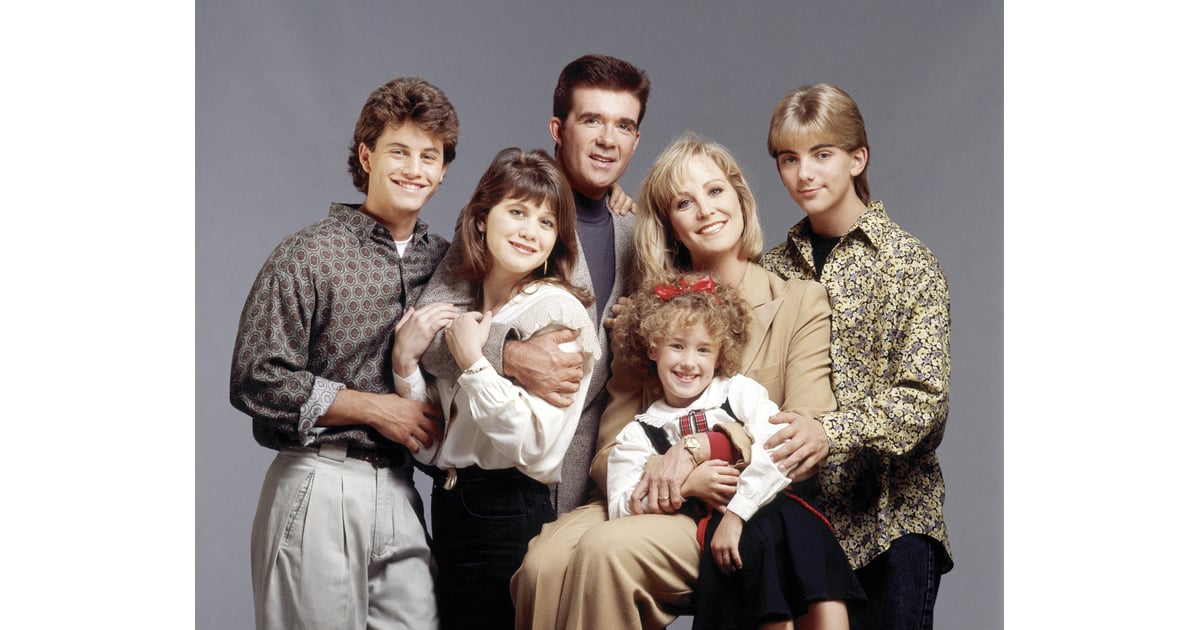
Image result for growing pains family portrait
It worked on Growing Pains
I had everything I'd ever wanted, and still I felt empty. I didn't want to be Ward Cleaver; I wanted to be married to Ward Cleaver. As it turns out, those sitcoms--and the church--forgot to tell me the model of home and family life they were idealizing wasn't ideal for everyone. So at great pain to myself and the people I love most, I embarked on a half-decade transition that has now landed me in a life that looks very much like those eighties sitcoms I loved so much, with our brightly-decorated home with a family picture hanging over the stairway in a quaint suburban neighborhood right next to an elementary school. Every day about 5:30 my husband and I greet each other as we get home from work, we make dinner, we watch TV or read or write. It's not ideal in that our children have to split their time between our home and their mothers' homes, but given the circumstances this is the best possible reality available to us.

Maybe a little more Brady Bunch meets My Two Dads than Leave it to Beaver.

My point is not to say, "Boo hoo, look how false ideals created by television and religion ruined my life." On the contrary, I would have to be blind not to recognize how lucky I am. Yes, it took a modest helping of blood, sweat, and tears to get here, but the fact that I was able to achieve this is a function of my privilege. I recently read an article about research showing that statistically, a white man raised in poverty has roughly the equivalent chance of success that a black man raised in a rich family has. And race is only one of the ways I'm privileged.

This is why representation matters. On TV, in movies, in literature, we need to see all kinds of people in all kinds of family, home, and life situations. We need people of all gender and sexual identities, we need people of all colors, we need people in various levels of economic status. In real life, there are many ways to achieve happiness; we need media that reflects this.

Also, Netflix, if you want to produce a sitcom about two gay dads who are non-custodial parents of five children living in the heart of suburban Mormon Utah, give me a call.

Thursday, December 7, 2017

Growing Into Batmanhood

The Batman I was first introduced to as a small child was the swashbuckling, dry-humored adventurer of Super Friends and the 1966 Adam West TV series. This Batman was based on the character as depicted in comic books from the 1940s through the 1960s, a cross between an overgrown child and a child's fantasy of a father figure. He was everything a young boy could hope for in a dad--a rich, powerful man who adopted the orphaned Robin, spent all his time having fantastic adventures with the boy, had a ready-made solution for every problem imaginable, and constantly spouted trite wisdom, often in the form of bad puns. For all his fatherliness, though, this Batman was a child emotionally, with his black-and-white morality (everyone in his world is either a hero or a villain), his disregard for any kind of real-world responsibilities outside of fighting crime (Bruce Wayne's profession is "playboy"), and his disinterest in romance (he constantly rejected the advances of supervillainesses, superheroines, and damsels in distress alike, claiming that women would be a distraction from his mission, but he may as well have said, "Girls have cooties").

Image result for batwoman kathy kane romance batman
Even in the "imaginary" stories where Batman got married, he behaved like a bratty child.

In the comic books of the 1970s through 1990s, Batman "grew up," as more realistic stories and artwork depicted him as a dark avenger, constantly brooding over his parents' murder. I was introduced to this grim and gritty Batman first through Tim Burton's 1989 film, which debuted when I was nine, and then through the comic books I started reading when I was twelve. Going into my teenage years, I loved how "adult" this Batman was, as this allowed me to continue enjoying a childhood favorite while distancing myself from the elements of the character I now saw as childish. In retrospect, I see this Batman as a teenage fantasy of adulthood, in reality an emotional teenager himself. He obsessed over a childhood tragedy as only a teenager could, distanced himself from the people who loved him with claims that he works best alone, and constantly flirted with femme fatales like Talia al Ghul and Catwoman without ever daring to commit to anything resembling a healthy relationship.

Image result for batman talia al ghul sexual tension
Batman got married once in the 1980s, but only because Talia slipped him a roofie. 

In the 2000s and 2010s, it has been refreshing to see Batman grow up emotionally along with me. It started in the comic books with the character embracing his family of Robins and Batgirls, like a young man realizing he really does love his family after spending his teenage years trying to avoid them for fear their lameness would rub off on him. Slowly, self-aware humor has crept into the stories, as when Ben Affleck's Batman says in Justice League that his superpower is being rich. This is a man who recognizes that dressing up as a bat to fight crime because you made a promise to your dead parents when you were eight is kind of silly, but embraces it because it's who he is. This is a man who enjoys what he does, knows himself, and acknowledges that he needs others. I've particularly enjoyed recent Batman comics, written by Tom King, where after 78 years of flirting Batman has finally proposed to Catwoman and they are exploring their relationship with surprising emotional maturity. They open up to each other, they make themselves vulnerable, and they go beyond melodramatic, angsty, adolescent sexual tension to actually making each other happy.

Related image
What? Batman admitting he has emotions like fear and love? This is new. 

I don't know where Batman will go from here, but I hope the character continues to grow up with me. Here's hoping Batman comics of the 2060s explore the challenges of wearing adult diapers under spandex!